How to Carry Tenniscore Into September Without Looking Out of Season
Quick Answer: Tenniscore transitions into fall better than any summer trend because the source material was never a summer wardrobe — real tennis clothing was built for chilly mornings and changeable courts, complete with cable knits, cardigans, and track jackets. Carrying it into September is mostly a fabric-and-layer swap: keep the pleated skirt and the polos, weight up the knits and socks, shift the palette from bright white toward cream, forest, and burgundy, and let the sneakers run year-round. No new aesthetic required — just the autumn half of the one you already own.
Here is what carries over, what retires, and three outfits from what is likely already in your closet.
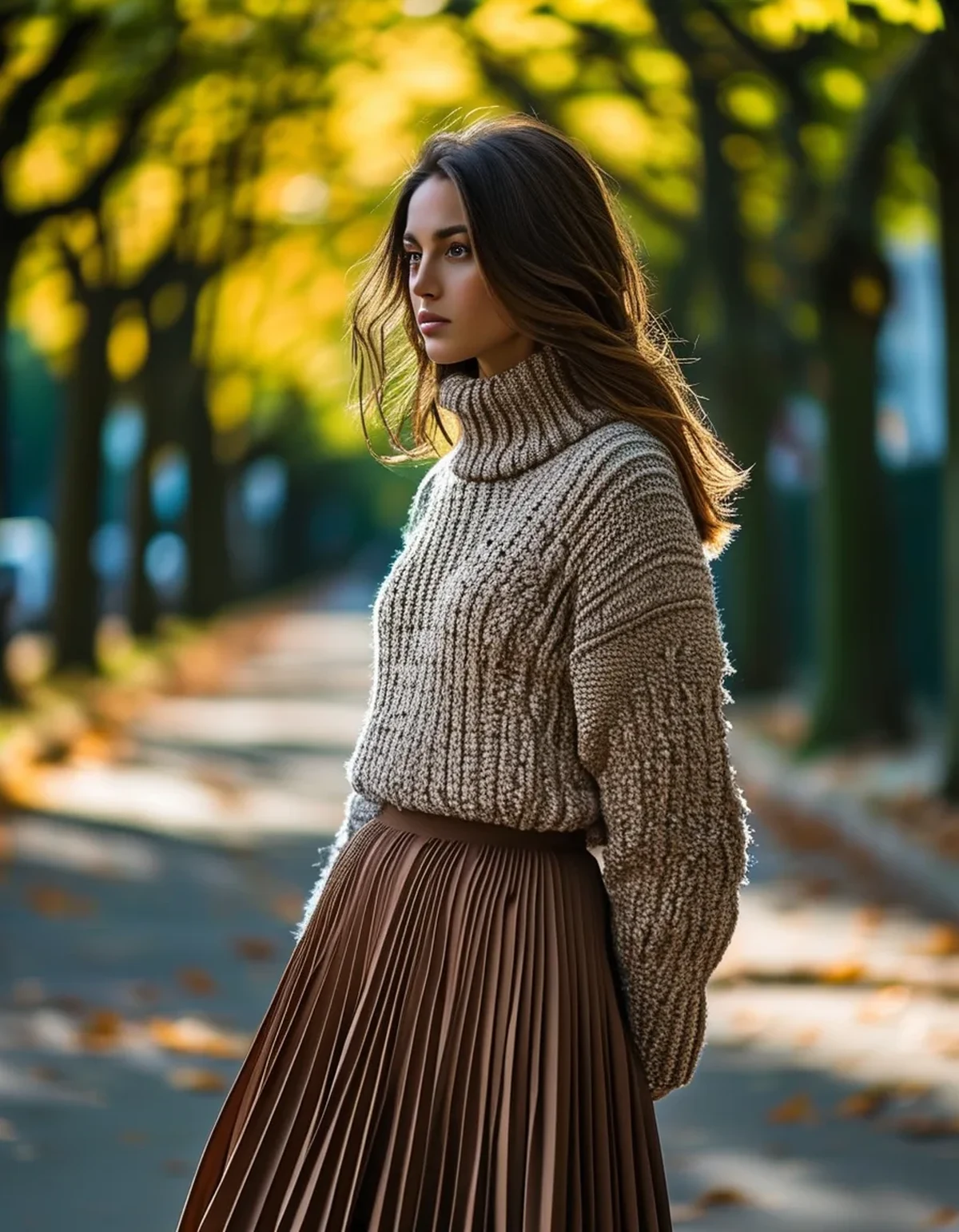
Why does tenniscore survive the season change when other summer looks die?
Because its references were four-season from the start.
The heritage wardrobe was layered by necessity. Country-club and college-court style — the source imagery the whole aesthetic borrows — existed in climates where morning matches were cold: cable-knit sweaters over polos, cardigans tied at the shoulders, track jackets zipped courtside. The cozy layer is not an addition to tenniscore; it is original equipment. That is the structural difference from purely hot-weather trends, which have no native answer to 55 degrees.
The silhouette is layer-friendly by geometry. A pleated mini pairs naturally with knee socks and tights; a fitted polo layers cleanly under crewnecks precisely because its collar and button placket are designed to show; a track jacket over a tennis dress reads intentional because athletes literally dressed that way. The proportions were engineered for stacking.
And the palette was never only white. Cream, camel, forest green, navy, and burgundy are all inside the historical reference — sweater trims, club stripes, autumn court kits. Shifting the colour temperature for fall does not dilute the look; it quotes a different month of the same archive.
Late August is the exact pivot window. Mornings are turning crisp across most of the country while afternoons stay warm — which is, not coincidentally, the weather the original wardrobe was built for. The trend and the forecast are briefly the same thing, and the pieces you wore all summer are one layer away from three more months of service.
Which pieces carry over, and which retire until spring?
An honest sort of the summer kit.
Carries over, promoted:
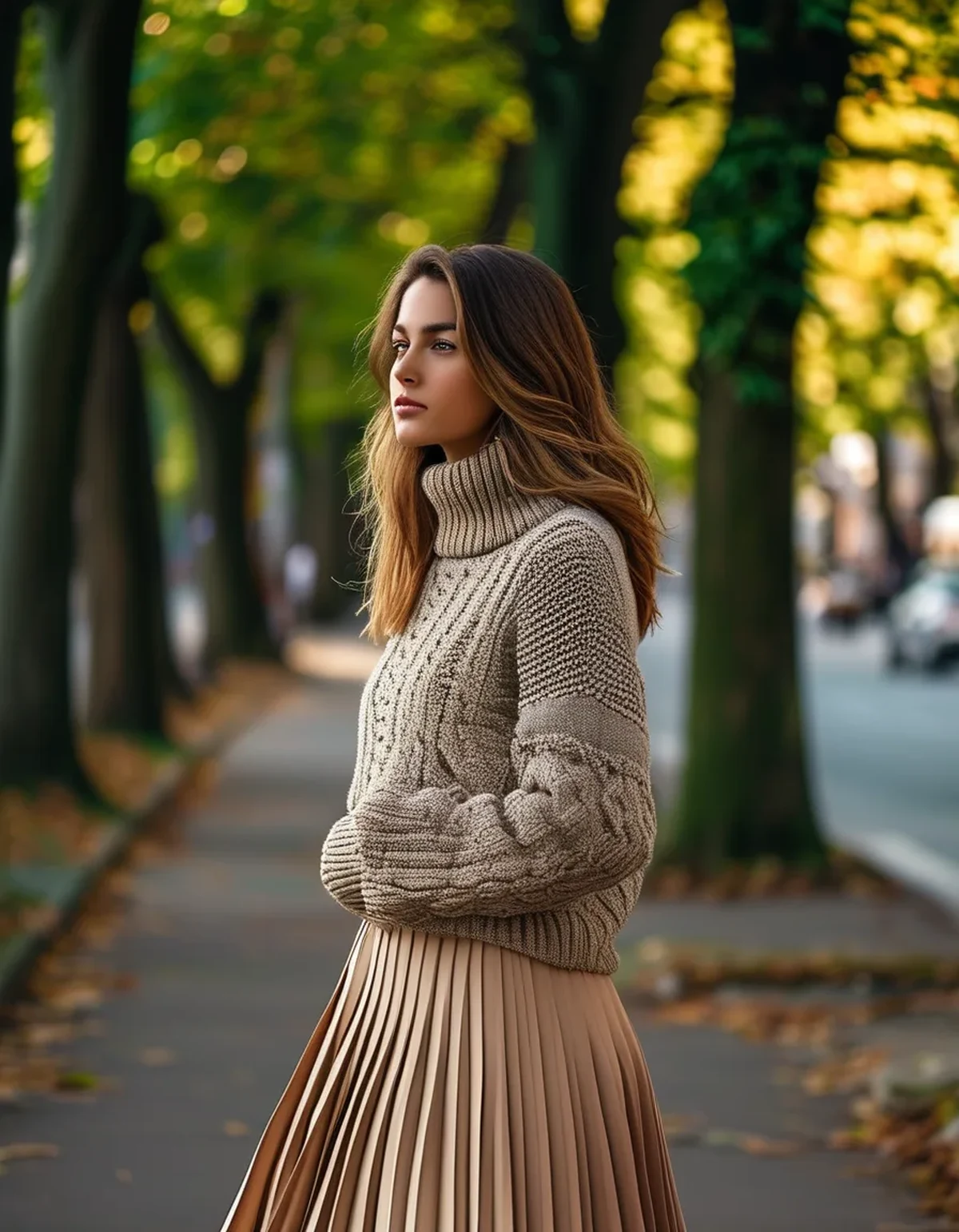
The pleated skirt is the anchor. Worn bare-legged through September’s warm afternoons, then with sheer tights and eventually opaques as temperatures drop — a pleated tennis skirt with built-in shorts stays practical straight through fall, and heavier knit-pleat versions extend it further. If you add one piece for the season, make it a mid-weight pleated skirt in cream, forest, or plaid.
Polos become the layering workhorse. Under crewnecks and cardigans with the collar out, the polo does in fall what it did alone in July. Long-sleeve polos are the trend’s best-kept transitional secret.
White sneakers run all year. They simply switch partners — from ankle socks to crew socks in cream and forest, which is the cheapest single update in the whole handover.
Cable knits, cardigans, and track jackets move from accessory to structure. The sweater that spent summer tied over shoulders now gets worn; the retro track jacket becomes the daily outer layer until real coats arrive.
Retires gracefully: linen shorts, tank-only looks, visors, and the lightest whisper-weight skirts — the pieces with no answer to a cool morning. Clean, store, and let them sit until May.
The judgment call: the tennis dress. Alone, it retires with the heat; over a long-sleeve fitted top and under a cardigan, it converts into a jumper-style pinafore look that carries surprisingly deep into fall. Try the layered version once before boxing it.
Myth vs Fact: Tenniscore After Summer
Myth: No white after Labor Day. Fact: The rule is a relic, and tenniscore is precisely the aesthetic where white stays correct — though the fall move is toward cream and winter white, which photograph warmer against autumn light and hide the season’s weather better than optic white does.
Myth: Skirts are a summer garment. Fact: The pleated-skirt-plus-tights formula is one of the oldest cold-weather outfits in the reference archive — school and club wardrobes ran it all winter. Sheer tights in September, opaques by late October, knee socks whenever: the skirt is seasonless; only the legwear changes.
Myth: Full kit is the goal. Fact: Head-to-toe tennis reads as costume in any season, and doubly so off-court in October. The look works at two-thirds strength: one anchor piece (skirt or polo), one layer from the archive (cable knit, track jacket), and one neutral street element — denim jacket, trench, plain knit — to break the set.
Myth: Logos and stripes make it more authentic. Fact: One club-stripe trim or one small crest is seasoning; several is a uniform. The archive photographs everyone always references are mostly logo-quiet — the authenticity lives in fabric and proportion, not branding.
Myth: You need to buy a fall tenniscore wardrobe. Fact: If you wore the look all summer, you own the anchors already. The handover needs crew socks, possibly tights, and at most one heavier skirt or knit — the rest is restyling, which is the entire point of an aesthetic built on a small consistent kit.
What are three September outfits from what you already own?
Formulas first, so the pieces can substitute freely.
One — the crisp-morning classic: pleated skirt, long-sleeve polo or fitted white tee, cable-knit sweater over, cream crew socks, white sneakers. Add sheer tights the week mornings drop below comfortable. This is the postcard version — coffee runs, campus, weekend errands — and every element does summer duty too, which is what makes the formula efficient.
Two — the sporty commuter: tennis dress or skirt-and-polo base, retro track jacket zipped half, crew socks, sneakers, and a structured tote. The track jacket carries the look through the windy weeks a cardigan cannot, and the whole outfit survives a bike or a train platform intact.
Three — the evening translation: pleated skirt in a dark tone, fine-gauge knit tucked or fitted turtleneck as it cools, tights, loafers or clean sneakers, and a trench or blazer over. This is tenniscore at one-third strength — recognisable, adult, and dinner-appropriate — proof the aesthetic scales down as well as it layers up.
Care notes for the handover month: whites picked up a summer of sunscreen at the collar and hem — treat and wash before storage or fall service, because set stains age into permanence over a winter in a drawer. Re-pleat skirts with a cool iron and hang them clipped at the waistband; pleats stored folded spend October relaxing. And buy the fall additions now rather than in October: late-summer sales discount exactly the knits and heavier skirts the handover needs, and the good cream pieces sell through first.
The whole transition costs one shopping trip at most. The look was never seasonal; the styling just has a September setting.
FAQ: Fall Tenniscore Questions, Answered
When do I switch from bare legs to tights?
Comfort decides, but as a styling rule: sheer or pointelle tights enter when mornings sit in the 50s, opaques when afternoons stop recovering. Knee socks bridge the gap on in-between days and are the most archive-accurate option anyway.
Can I still wear my white tennis skirt to actual fall activities?
Yes — pleated skirts with built-in shorts handle pickleball, errands, and sideline duty in September exactly as they did in July; just add the layer up top. For genuinely cold courts, knit-pleat skirts over leggings keep the silhouette without the shiver.
What single purchase upgrades summer tenniscore for fall most?
A quality cable-knit sweater in cream — it converts every summer anchor you own into a fall outfit, layers over polos and under coats, and belongs to the reference archive so completely that it reads correct for the next decade of Septembers.
How do I keep the look from reading like a costume off-court?
Run it at two-thirds strength: one tennis anchor, one archive layer, one plain street piece — and keep logos to a single quiet appearance. The moment every item is court-coded, you are in uniform territory; break the set and you are in style territory.
TL;DR:
- Tenniscore transitions because its source wardrobe was built for chilly courts — cable knits, cardigans, and track jackets are original equipment, not additions.
- Carry the pleated skirt, polos, and white sneakers forward; add tights, crew socks, and heavier knits; shift white toward cream, forest, and burgundy; retire linen and tank-only looks.
- Run the look at two-thirds strength with one plain street piece to stay styled rather than costumed, and keep logos to one quiet appearance.
- Treat sunscreen stains, re-pleat and hang skirts, and buy the fall knits in late-summer sales before the cream pieces sell through.
Pull the summer skirt and the sweater you tied over your shoulders in July, add crew socks, and wear the handover this week. September is the month the aesthetic was actually built for.
See It in Motion
Seen here: UPF 50+ Adjustable A-Line Running Skort with Pockets — shop it on bubblelime.com
Keep Reading
This article is for general informational and styling purposes only. Fit, sizing, and product availability may vary.