Knife Pleat or Box Pleat: Which One Actually Suits You
Quick Answer: Knife pleats fold in one direction and lie flat, creating a narrow, streamlined line with movement that swishes. Box pleats fold outward in pairs, adding volume at the hip and holding a fuller, more structured shape. Knife pleats suit anyone wanting a slimmer line or working with a fuller hip; box pleats add shape where there is less, and read more preppy and more formal. Fabric weight changes both more than the pleat type does.
The pleat is a silhouette decision, not a detail.
This blog has covered why a pleated skirt reads preppy on one person and costume on another, pleated skirt swing restriction, and styling pleats for non-tennis contexts. This is the mechanical difference underneath all of it.
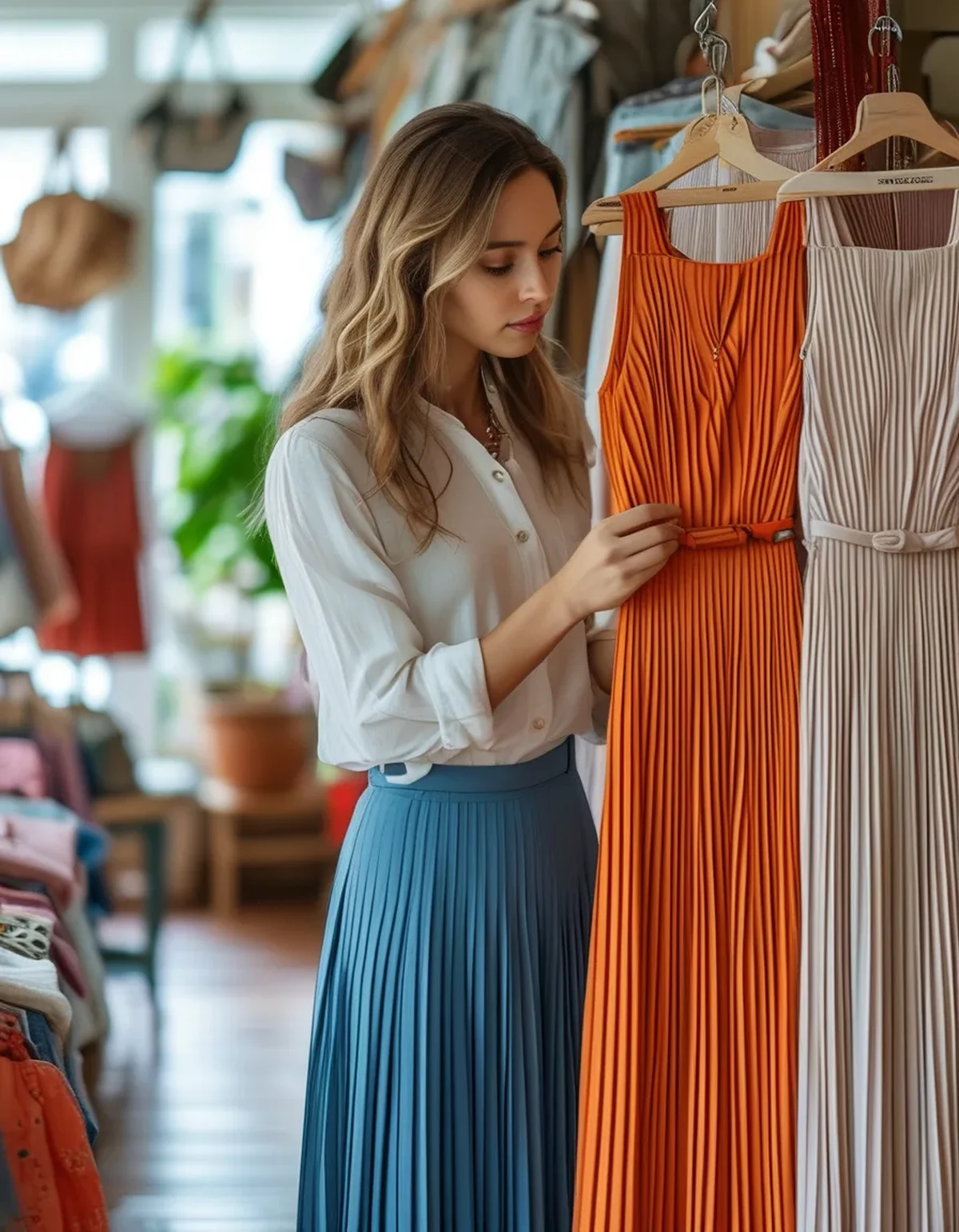
What is actually different between them?
Direction of fold, and everything follows from that.
Knife pleats all fold the same way, usually to the right, and lie flat against each other. The result is a continuous, narrow line down the skirt.
Box pleats fold in opposing pairs, creating a flat panel between two folds that stands slightly away from the body.
Knife pleats add almost no width at the waist and hip. They open only when you move, which is why they read slim standing still and full in motion.
Box pleats add width immediately. The panel structure holds volume even at rest, which builds shape at the hip that is not otherwise there.
Movement differs completely. Knife pleats swish and ripple; box pleats swing as blocks and hold their shape.
And the visual rhythm is different. Knife pleats produce many fine vertical lines, which lengthen. Box pleats produce fewer, wider panels, which read structured and slightly more formal.
Which one suits which shape?
This is where the two genuinely diverge.
Knife pleats work well over a fuller hip because they lie flat and do not add width where there already is some.
Box pleats add shape at the hip, which is useful on a straighter frame and is why they read so strongly as a preppy classic.
Knife pleats lengthen the leg line through fine vertical repetition, which makes them the safer choice on a shorter frame.
Box pleats need length to work. A very short box-pleated skirt reads costume; the same skirt two inches longer reads considerably more polished.
For a defined waist, box pleats emphasise the contrast because they hold volume below a fitted waistband.
And for anything worn under a coat or a long jacket, knife pleats layer better. Box pleats add bulk exactly where a coat is already adding it.
Fabric weight overrides all of this. A heavy knife-pleated wool holds volume like a box pleat; a light box-pleated polyester collapses and behaves like a knife pleat. Check the weight before you decide anything based on the pleat name.
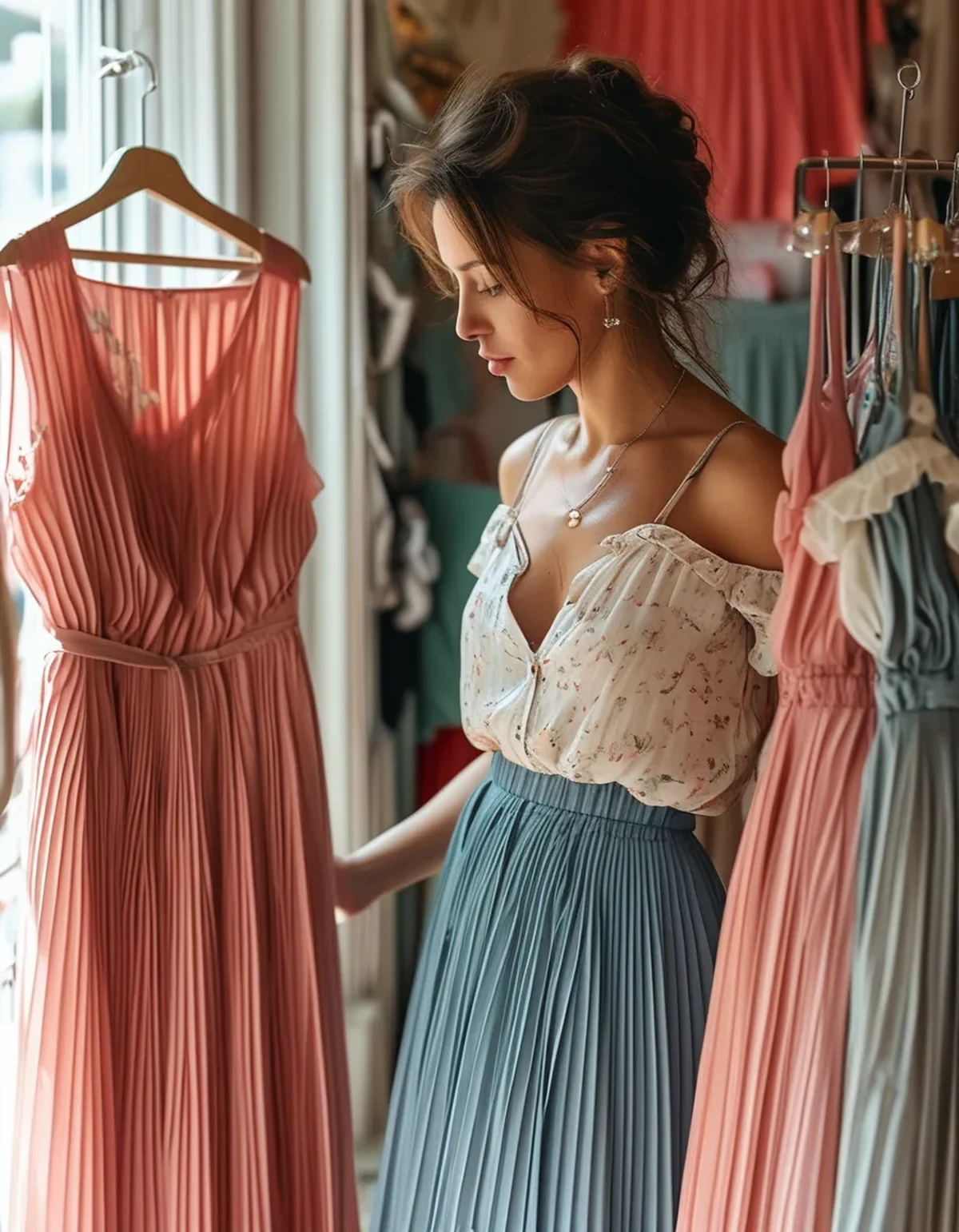
Myth vs Fact: Pleated Skirts
Myth: Pleats always add bulk. Fact: Knife pleats in a mid-weight fabric add almost none at rest. Box pleats do, deliberately, and that is what they are for.
Myth: Pleated skirts are inherently sporty. Fact: The pleat is neutral. What reads as sporty is length, fabric and the shoe. The same box-pleated skirt in wool with a loafer and a knit reads distinctly formal.
Myth: Permanent pleats stay in forever. Fact: Heat-set pleats in synthetic fabric are durable but not permanent. Hot washing and tumble drying relax them, and once they soften they do not come back.
Myth: A pressed pleat and a stitched-down pleat are the same. Fact: Stitched-down pleats hold their shape indefinitely and sit flatter over the hip. Pressed-only pleats give more movement and need more care. Check the top few inches of the skirt to see which you have.
Myth: You should size up in pleated skirts. Fact: Fit at the waist and let the pleats do the rest. A pleated skirt sized up at the waist sits low and the pleats lose their vertical alignment entirely.
Myth: All pleated skirts restrict movement. Fact: Depends entirely on how far up the pleat opens and whether it is stitched down. A skirt stitched down to the hip with a full sweep below moves freely; one stitched down to mid-thigh does not.
How to buy and care for either
Seven practical points.
Check the pleat direction at the hem to identify which you are looking at. Knife pleats all lean one way; box pleats alternate.
Feel the weight. Anything under a light mid-weight will collapse regardless of the pleat, and anything very heavy will hold volume regardless.
Check where the stitching stops. Stitched down to the hip gives a flat hip and a full sweep; stitched down further restricts the stride.
Fit the waist first. Pleated skirts are unforgiving about waist position, and the pleats hang wrong the moment the waistband sits low.
Sit down in the fitting room. Pleats behave completely differently seated, and the length that works standing is often noticeably shorter seated.
Wash cool and hang, never tumble. Heat is what relaxes heat-set pleats, and once relaxed they are effectively gone.
And hang by the waistband, not folded. Folding across the pleats creates a horizontal crease that is very difficult to remove from synthetic pleating.
A last note on static: pleated synthetics build static badly in dry autumn air. An anti-static spray, or a light mist of water on tights before dressing, solves it in seconds.
FAQ: Pleat Type Questions, Answered
What is the difference between knife pleats and box pleats?
Knife pleats all fold in the same direction and lie flat, creating a narrow line that opens when you move. Box pleats fold in opposing pairs and hold volume at rest, adding structured width at the hip.
Which pleat is more flattering?
It depends on what you want. Knife pleats lie flat and lengthen, which suits a fuller hip or a shorter frame. Box pleats add shape at the hip, which suits a straighter frame and reads more formal and more preppy.
How do I stop pleats falling out?
Wash cool and hang dry, never tumble. Heat relaxes heat-set pleats permanently. Hang the skirt by the waistband rather than folding it, since a crease across the pleats is very hard to remove.
TL;DR:
- Knife pleats fold one way and lie flat: slim at rest, full in movement, lengthening.
- Box pleats fold in opposing pairs and hold volume at rest: structured, preppy, shape-adding at the hip.
- Fabric weight matters more than pleat type. Check the weight before you decide anything.
- Wash cool and hang. Heat is what kills heat-set pleats, and it is not reversible.
Pick the pleat for the silhouette you want, not for the one that looked good on the hanger.
See It in Motion
Seen here: UPF 50+ Pleated Running Skort with 26” Leggings & Pockets — shop similar styles on bubblelime.com
Keep Reading
This article is for general informational and styling purposes only. Fit, sizing, and product availability may vary.