The Sock Mistake That Quietly Breaks a Tenniscore Outfit
Quick Answer: No-show socks are the default choice for a clean tenniscore look, but many styles ride down inside the shoe during walking and peek out the back at the heel — a low-cut sock with a silicone heel grip actually stays hidden through real movement.
The outfit looks perfect standing still. Then you take a few steps and a sock edge starts creeping out the back of your sneaker, breaking the clean line the whole look was going for.

Why do no-show socks fail specifically with sneaker styling?
Most no-show socks are cut low enough to be invisible while standing still, but that same low cut means there’s minimal fabric anchoring the sock in place once you’re walking, and the natural heel-lift motion inside a sneaker pulls the sock edge upward and backward. Without a way to stay gripped at the heel, the sock migrates and becomes visible exactly where it’s supposed to disappear.
This is more noticeable with canvas or low-top sneakers styled for tenniscore looks specifically, since the shoe opening sits lower and shows more of the ankle area than a higher sneaker silhouette would.
What sock features actually solve this?
A silicone heel grip strip sewn into the sock’s heel is the single most effective fix — it’s a small rubberized band that holds the sock in place against your actual heel rather than letting it slide freely inside the shoe. Many athletic sock brands now include this feature specifically marketed as ‘stay-put’ or ‘no-slip’ rather than just ‘no-show.’
A slightly deeper cut than the absolute minimum also helps — socks marketed as the lowest possible cut often sacrifice the fabric needed to stay anchored, while a marginally higher (still invisible while standing) cut gives the sock more surface area to grip.
Does sneaker choice affect this as much as sock choice?
Yes — sneakers with a padded, snug heel collar naturally hold a sock in place better than a looser or lower-cut sneaker style, regardless of which sock you’re wearing. If a favorite pair of sneakers consistently causes sock slippage no matter what sock is used, the shoe’s heel construction is likely a contributing factor, not just the sock.
Breaking in new sneakers with the actual socks you plan to wear them with (rather than switching sock styles later) also helps the shoe’s heel padding mold to hold that specific sock style more reliably over time.
5 Mistakes That Ruin the No-Show Sock Look
Buying the lowest-cut sock available assuming lower is always better. The lowest cut styles often sacrifice the fabric anchor needed to stay put.
Skipping the heel grip feature to save a few dollars. This is the single most impactful feature for staying invisible through actual movement.
Wearing a sock size too small, stretching the fabric thin. Overstretched fabric loses its grip elasticity faster.
Not testing socks with the actual sneakers before an event. Sock-and-shoe combinations behave differently together than either does alone.
Ignoring sock material — pure cotton stretches out and loses grip faster than a cotton-spandex blend.
Are there alternatives to no-show socks worth considering?
Low-cut ankle socks with a small visible cuff are becoming part of the tenniscore aesthetic intentionally rather than something to hide — a small ribbed white cuff peeking above a sneaker actually reads as an authentic tennis reference rather than a styling mistake, if that’s a look you’re open to.
For a fully bare-ankle look, sockless styling with a foot-liner sock (an even more minimal cut designed purely for sweat absorption, not visibility) paired with breathable sneakers is another route, though it requires more frequent shoe cleaning to manage moisture.
FAQ: Tenniscore Sock Questions, Answered
Do heel grip socks work with all sneaker styles?
They help most with snugger, padded-heel sneakers — very loose or slip-on styles may still show some sock movement regardless of the grip feature.
Is it worth paying more for athletic-brand no-show socks over basic ones?
Often yes for this specific issue — athletic brands are more likely to include heel grip technology than basic multi-packs, which tend to prioritize cost over staying-power features.
Does this issue happen with ankle boots or other tenniscore shoe pairings too?
Less so — boots and higher-cut shoes cover more of the ankle naturally, so sock visibility is mostly a sneaker-specific problem.
TL;DR:
- No-show socks slip and peek out because low cuts lack the fabric to stay anchored during walking
- A silicone heel grip strip is the single most effective fix for staying invisible
- Sneaker heel construction matters as much as sock choice — snug, padded heels hold socks better
- A visible ribbed cuff is becoming an intentional part of tenniscore styling if hiding socks isn’t the goal
A sock mistake this small is easy to overlook until it’s visibly breaking the clean line of an otherwise perfect outfit — the heel grip fix is a five-dollar solution to a very visible problem.
See It in Motion
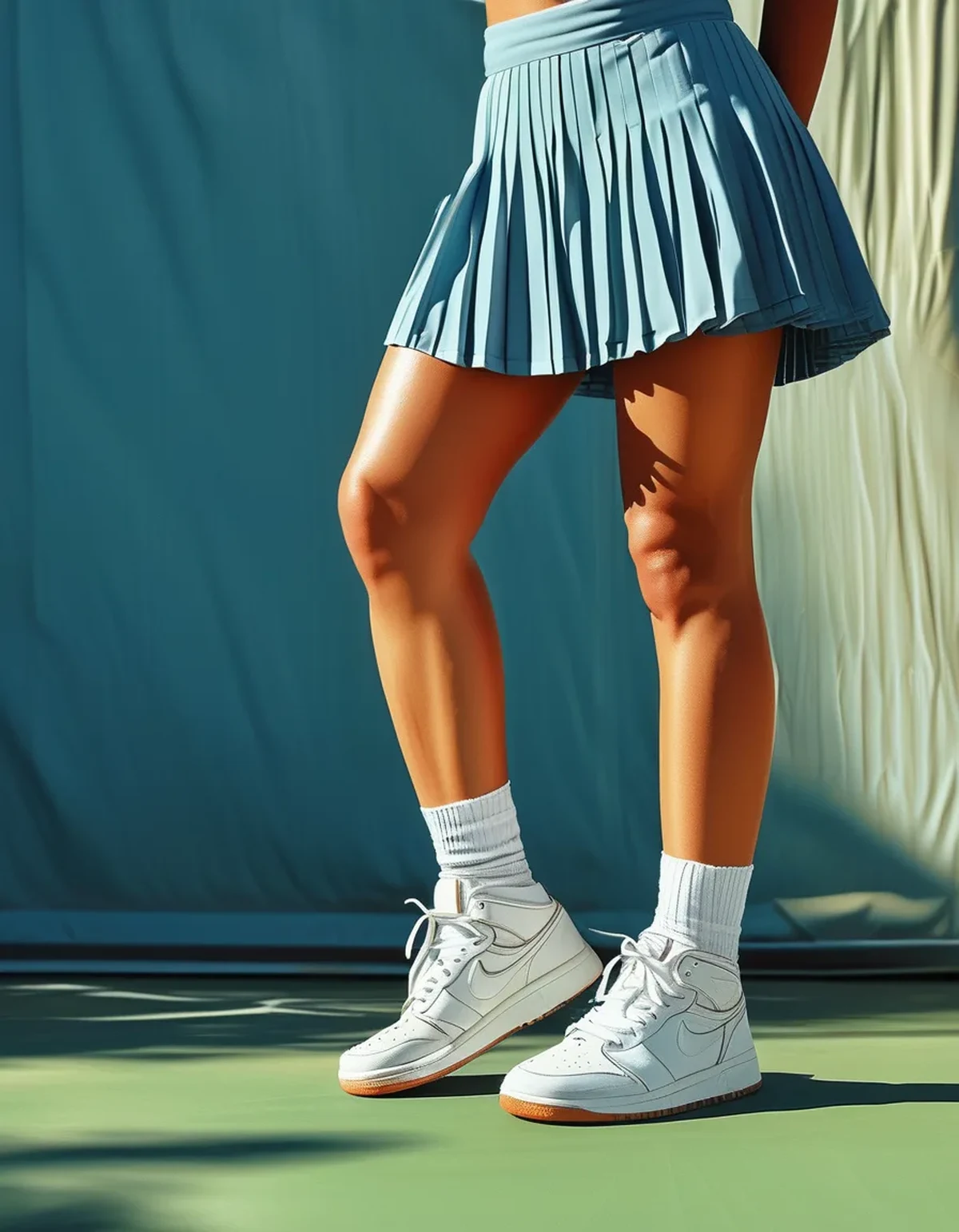
Seen here: UPF 50+ Pleated Running Skort with 26” Leggings & Pockets — shop similar styles on bubblelime.com
Keep Reading
This article is for general informational and styling purposes only. Fit, sizing, and product availability may vary.