Why a Visor Reads Differently on Your Face Than a Baseball Cap Does
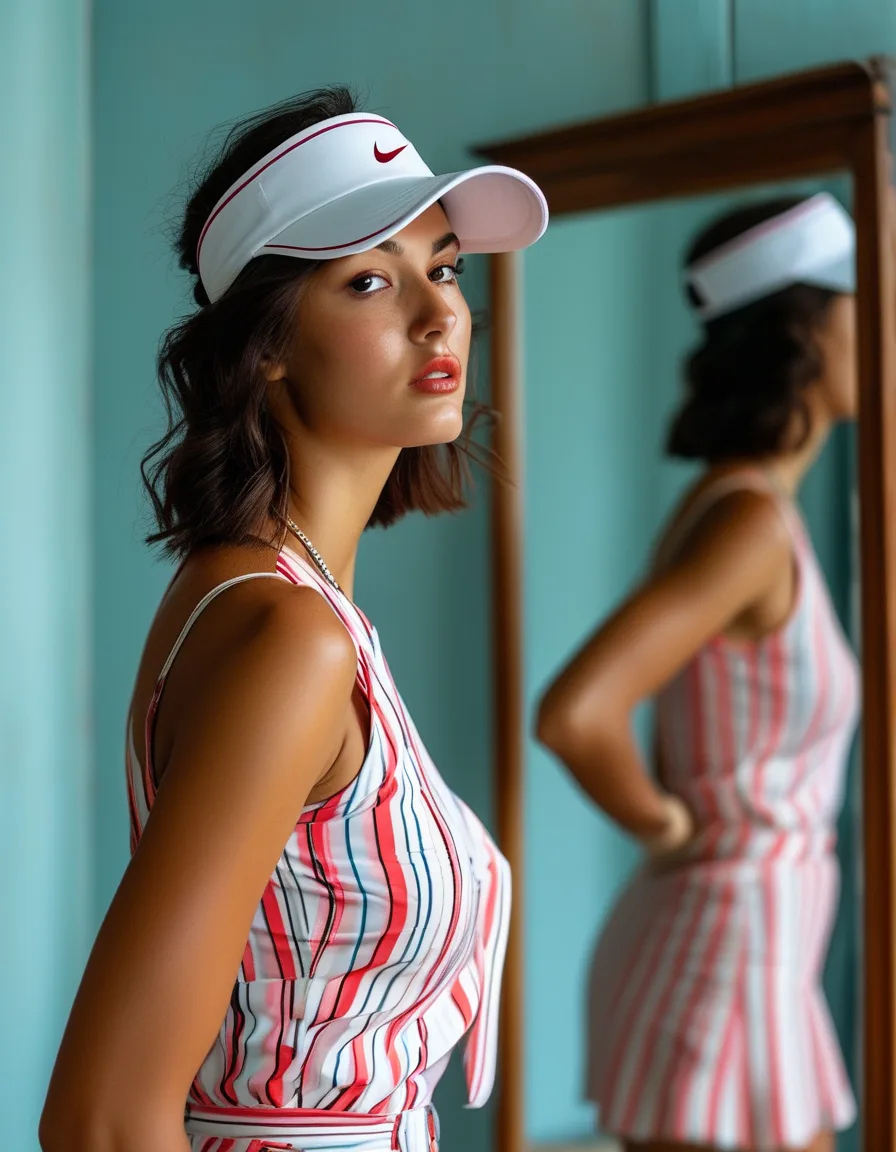
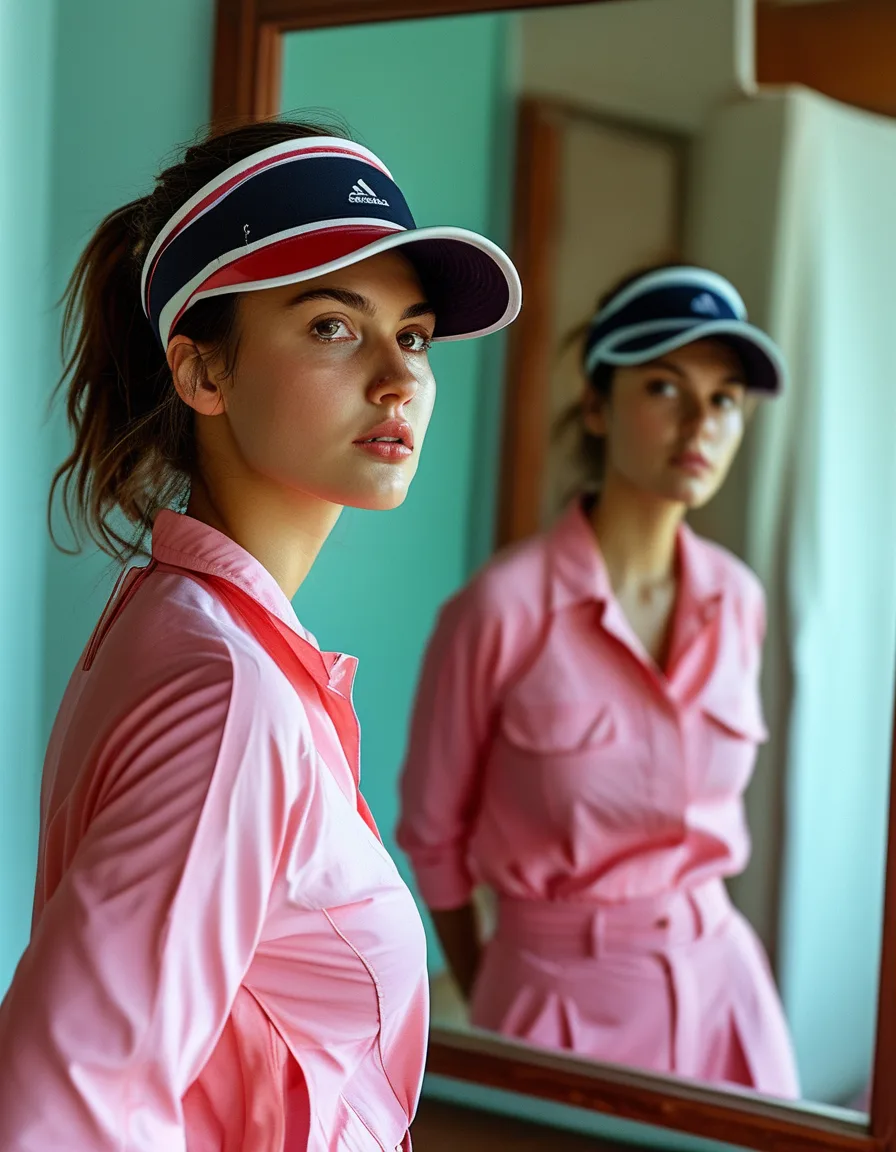
A visor and a baseball cap get treated as interchangeable tenniscore accessories, chosen based on whichever is closer at hand. But a cap’s closed top adds visual height and frames the whole face, while a visor’s open crown leaves the forehead exposed and shifts the eye toward the cheekbones and jaw, meaning the two accessories actually change face proportion in opposite directions.
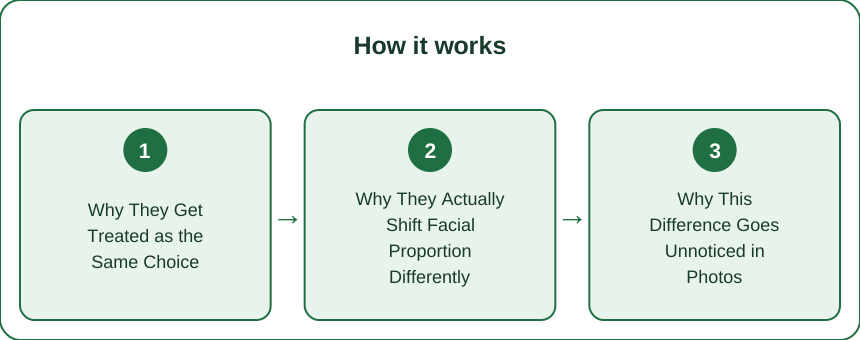
Why They Get Treated as the Same Choice
The category assumption: both being sun-blocking, sporty headwear from the same tenniscore aesthetic, which makes it easy to assume they’re interchangeable and pick whichever matches the outfit’s color scheme.
Why They Actually Shift Facial Proportion Differently
The structural difference: a cap’s closed crown adding visual height above the face and drawing the eye upward and inward, framing the whole face similarly to how a hat brim does, while a visor’s open top leaves the forehead visible, which shifts attention down toward the cheekbones, jaw, and sunglasses instead.
Why This Difference Goes Unnoticed in Photos
The overlap: both accessories reading as simply ‘sporty’ in a quick glance or a candid photo, so the underlying proportion shift only becomes obvious when comparing the same face and outfit in both a cap and a visor side by side.
How to Actually Choose Between Them
The practical guide: a visor working well for someone who wants their hairstyle or forehead visible and prefers attention on the lower face, while a cap suits someone who wants a more contained, framed look, and the frame (a cap frames the whole face while a visor shifts focus to the jawline — choosing between them is a proportion decision, not just a styling preference.)
A visor and a baseball cap get treated as interchangeable tenniscore accessories, but a cap’s closed crown adds visual height and frames the whole face, while a visor’s open top leaves the forehead exposed and shifts attention down toward the cheekbones and jaw. Both read as simply ‘sporty’ in a quick glance, so the underlying proportion shift only becomes obvious when comparing the same outfit in both side by side. A visor suits someone who wants the forehead visible and attention on the lower face, while a cap suits a more contained, framed look.
See It in Motion
Seen here: UPF 50+ Pleated Running Skort with 26” Leggings & Pockets — shop similar styles on bubblelime.com
Keep Reading
This article is for general informational and styling purposes only. Fit, sizing, and product availability may vary.