Why a Pleated Skirt Hangs Differently Depending on How the Pleats Are Set
Quick Answer: Pleats behave according to how they are formed and where they are stitched. Knife pleats all fold one direction and give a crisp uniform swing; box pleats alternate and add volume at the hip; sunburst or accordion pleats are heat-set into the fabric and flare wide from a narrow waist. Stitched-down pleats stay flat over the hip and release lower. Match the pleat type to the movement you want.
Same length, same fabric.
One swings, one hangs.
The construction was decided long before the fabric was cut.
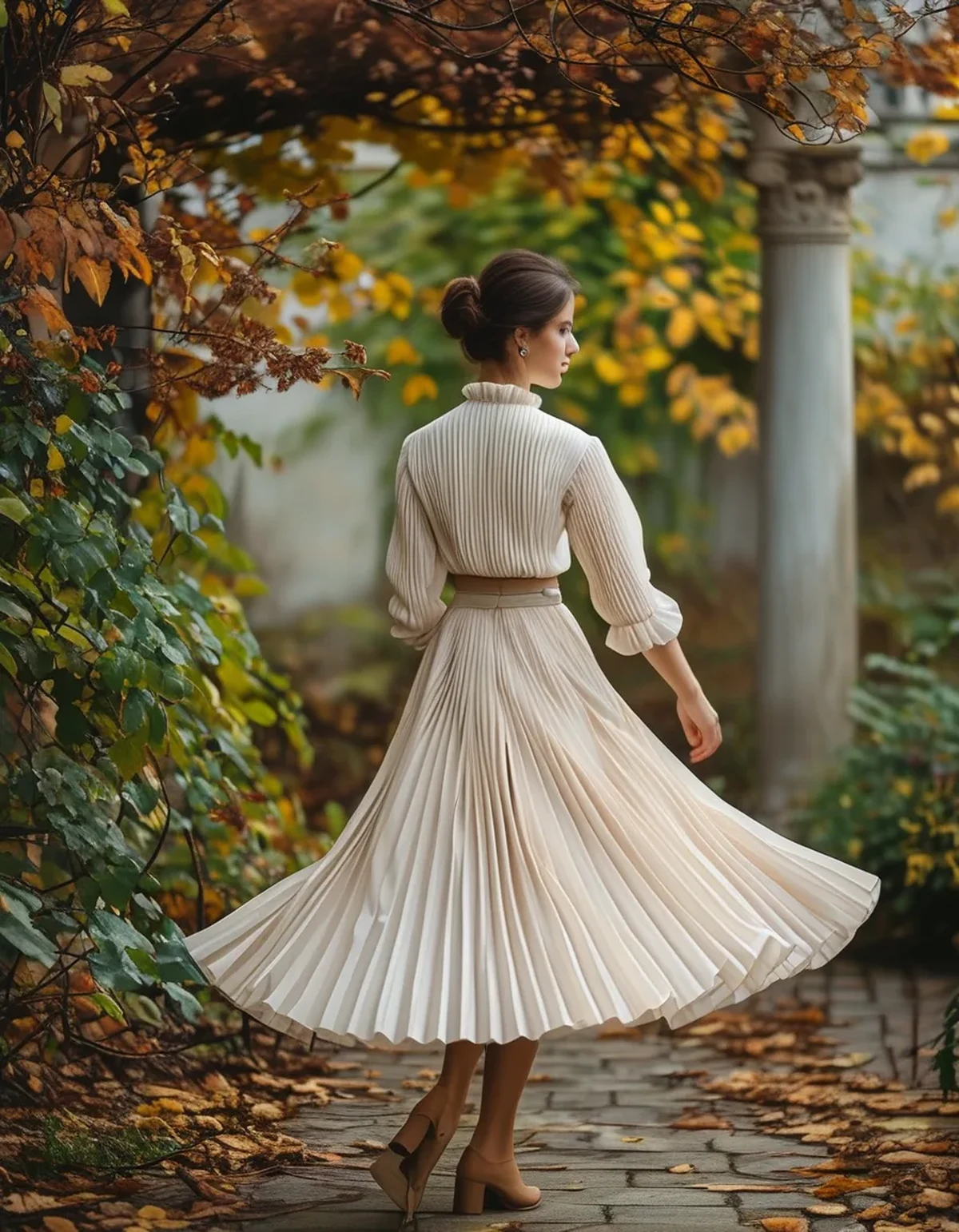
What are the main pleat types and how do they move?
Six constructions and what each one does on a body.
Knife pleats fold in one direction all the way round. They give the most uniform swing and the cleanest vertical line. This is the classic tennis skirt pleat, and it reads as crisp and sporty rather than romantic.
Box pleats alternate outward in pairs. They create more volume and a more structured shape, standing away from the body rather than skimming it. Excellent for adding shape at the hip and less flattering if you do not want volume there.
Inverted box pleats fold inward. They sit flatter at rest and release volume when you move, which makes them the most versatile for a skirt that needs to look tidy standing and move properly walking.
Sunburst and accordion pleats are heat-set into the fabric rather than folded and stitched. They are narrower at the waist and wider at the hem, so they flare dramatically and move constantly. They require synthetic fabric to hold the set, which is why almost all of them are polyester.
Stitched-down pleats are secured to a set depth — typically to the hip — then released below. They eliminate bulk at the waist and hip and give a clean line before the movement begins. This is the construction that flatters most people and it is the most expensive to make.
Pressed versus unpressed changes everything. The same pleat construction pressed sharply reads as crisp and structured; left unpressed it reads soft and full. Many skirts look completely different after one wash if you do not press them back.
How do you tell what you are looking at?
Six checks you can do on a hanger or in photos.
Look at the waistband from the side. If the fabric is flat and smooth over the hip before it opens out, the pleats are stitched down. If it is bulky right from the waist, they are not.
Count the pleat direction. All folds facing one way is knife. Alternating outward pairs is box. Alternating inward is inverted box.
Check the hem width relative to the waist. A very wide hem from a narrow waist means sunburst or accordion. A hem roughly proportional to the pleat count means folded pleats.
Check the fibre content. Heat-set pleats need synthetic fibre to hold. A sunburst pleat in natural fibre will fall out, so if a natural-fibre skirt claims permanent pleats, be sceptical.
Look at the lining. A lined pleated skirt hangs more predictably and reduces cling. An unlined synthetic pleat clings noticeably, particularly in dry autumn air.
Handle the fabric weight. Heavier fabric holds a fold and swings slowly; lighter fabric flutters and creases. Neither is better, and they produce completely different looks from identical patterns.
Seasonal note: early autumn is peak pleated skirt season and also when static becomes a genuine problem. Drier indoor air plus synthetic accordion pleats plus tights equals cling. An anti-static spray, or a natural-fibre lining, solves what looks like a fit problem.
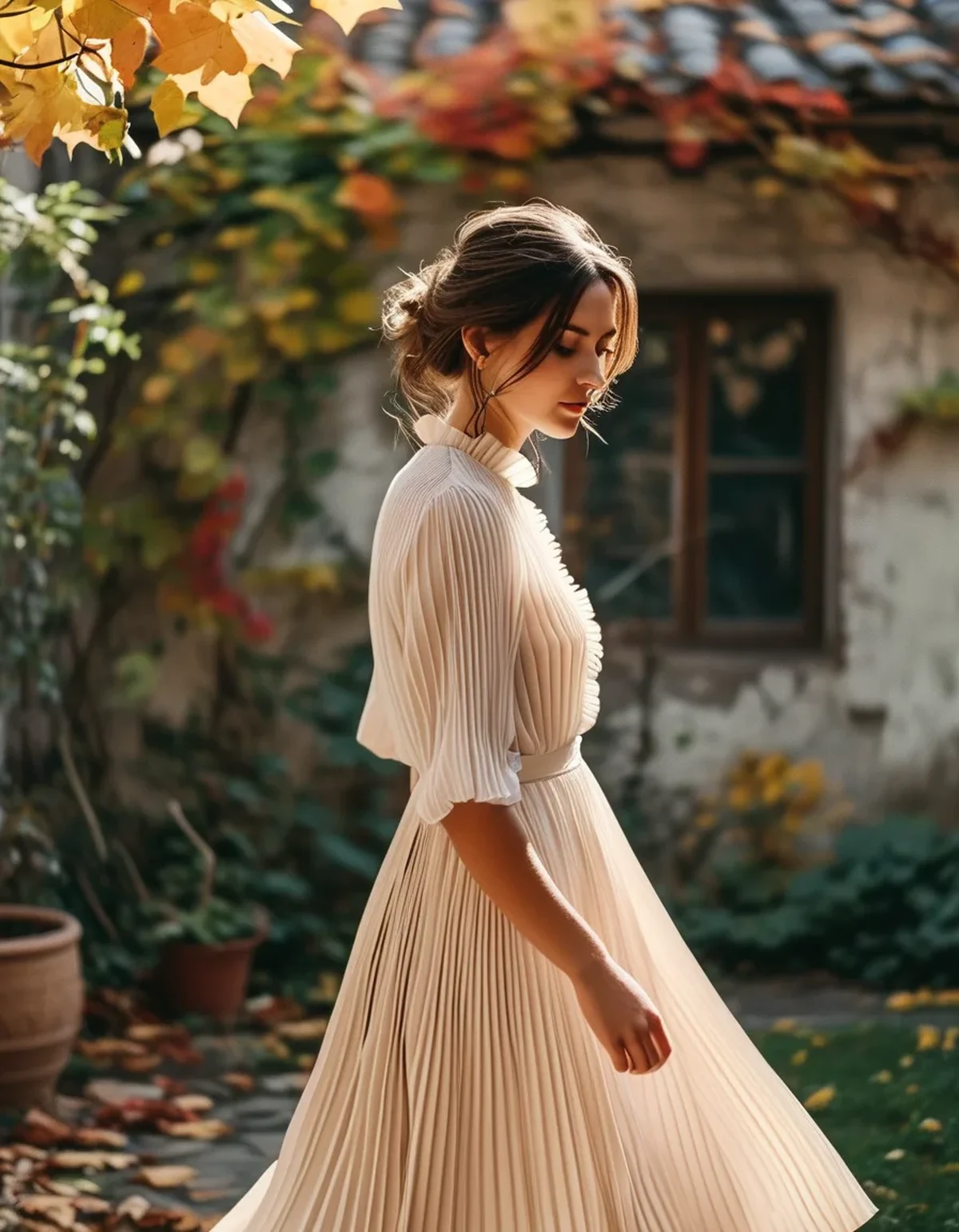
How do you choose and care for them?
Six practical points.
Choose the pleat for the effect you want. Crisp and athletic: knife pleats, pressed, mid-length. Volume and structure: box pleats. Movement and drama: accordion. Clean line with movement below: stitched-down inverted box.
Consider where the volume lands. Box pleats add visible volume at the hip. If that is not what you want, stitched-down or knife pleats sit far closer to the body.
Match length to pleat depth. A very short pleated skirt with deep pleats has a lot of fabric in a small space and can look bulky. Deeper pleats generally want more length to hang properly.
Hang, do not fold. Folding a pleated skirt across the pleats creates cross-creases that are difficult to remove. Hang from the waistband, ideally clipped.
Wash gently and reshape wet. Cold wash, gentle cycle, and hang immediately. Smooth the pleats back into line while damp and most of them will re-set as they dry, particularly synthetics.
Press with a cloth if you press at all. Direct heat on synthetic pleats can flatten or shine them permanently. A pressing cloth and a moderate iron, following the existing fold lines, is the safe method — and heat-set accordion pleats generally need no pressing at all if hung correctly.
Myth vs Fact: Pleated Skirts
Myth: pleats add bulk to everyone. Fact: box pleats add volume; stitched-down knife pleats sit almost flat over the hip and release lower. The construction decides, not the category.
Myth: all pleats are permanent. Fact: only heat-set pleats in synthetic fabric are. Folded and stitched pleats in natural fibre need pressing to stay crisp.
Myth: pleated skirts are hard to care for. Fact: they are easy if you hang rather than fold and reshape while damp. Most pleat damage happens in a drawer or a suitcase.
Myth: a pleated skirt is inherently sporty. Fact: knife pleats in a technical fabric read sporty. The same pleat in a heavy wool or a satin reads formal. Fabric carries as much of the message as construction.
Myth: more pleats is better. Fact: pleat count sets the density of the swing, not the quality. Fewer, deeper pleats in a heavier fabric can move better than many shallow ones.
Myth: you cannot wear pleats if you are tall. Fact: pleat length and depth need to scale, which is the actual issue. A pleat depth designed for average proportions can look small on a taller frame — look for longer lengths with proportionally deeper pleats rather than avoiding the style.
FAQ: Pleated Skirt Questions, Answered
What is the difference between knife and box pleats?
Knife pleats all fold in one direction for a uniform crisp swing. Box pleats alternate outward and add structured volume at the hip.
What are stitched-down pleats?
Pleats secured flat to about hip level, then released below. They remove bulk at the waist and hip and give the cleanest line.
Why do some pleats never fall out?
Heat-set pleats in synthetic fabric are permanent. Folded pleats in natural fibre are not, and need pressing.
Which pleat adds least volume at the hip?
Stitched-down knife pleats. Box pleats add the most.
How should I store a pleated skirt?
Hang it from the waistband, never fold across the pleats. Cross-creases are very hard to remove.
How do I wash it?
Cold, gentle cycle, hang immediately, and smooth the pleats into line while damp so they re-set as they dry.
Why does my pleated skirt cling in autumn?
Static — dry indoor air plus synthetic pleats plus tights. Anti-static spray or a lining solves it.
TL;DR:
- Knife pleats swing uniformly; box pleats add hip volume; accordion flares dramatically; stitched-down gives the cleanest line.
- Only heat-set synthetic pleats are permanent — natural-fibre pleats need pressing.
- Check the side profile at the hip to see whether pleats are stitched down.
- Hang, never fold, and reshape the pleats while damp after washing.
- Autumn cling is static, not fit — spray or line the skirt.
Next time you are shopping, look at the skirt sideways at the hip before you look at the price. That angle tells you how it will hang.
See It in Motion
Seen here: UPF 50+ Pleated Running Skort with 26” Leggings & Pockets — shop similar styles on bubblelime.com
Keep Reading
This article is for general informational and styling purposes only. Fit, sizing, and product availability may vary.