Why Tenniscore Reads Dated in September and the Two Swaps That Fix It
Quick Answer: Tenniscore reads as summer because its core elements — bare legs, white low-profile trainers, fine cotton knit and a short pleated hem — are all warm-weather signals. Swapping the footwear for a loafer or a low boot, and adding opaque hosiery in a considered colour, keeps the silhouette and the reference while moving the whole outfit into the season. Those two changes do more than any amount of layering.
The skirt is fine. The outfit is not.
It is the two things at the bottom that are still reporting for July.
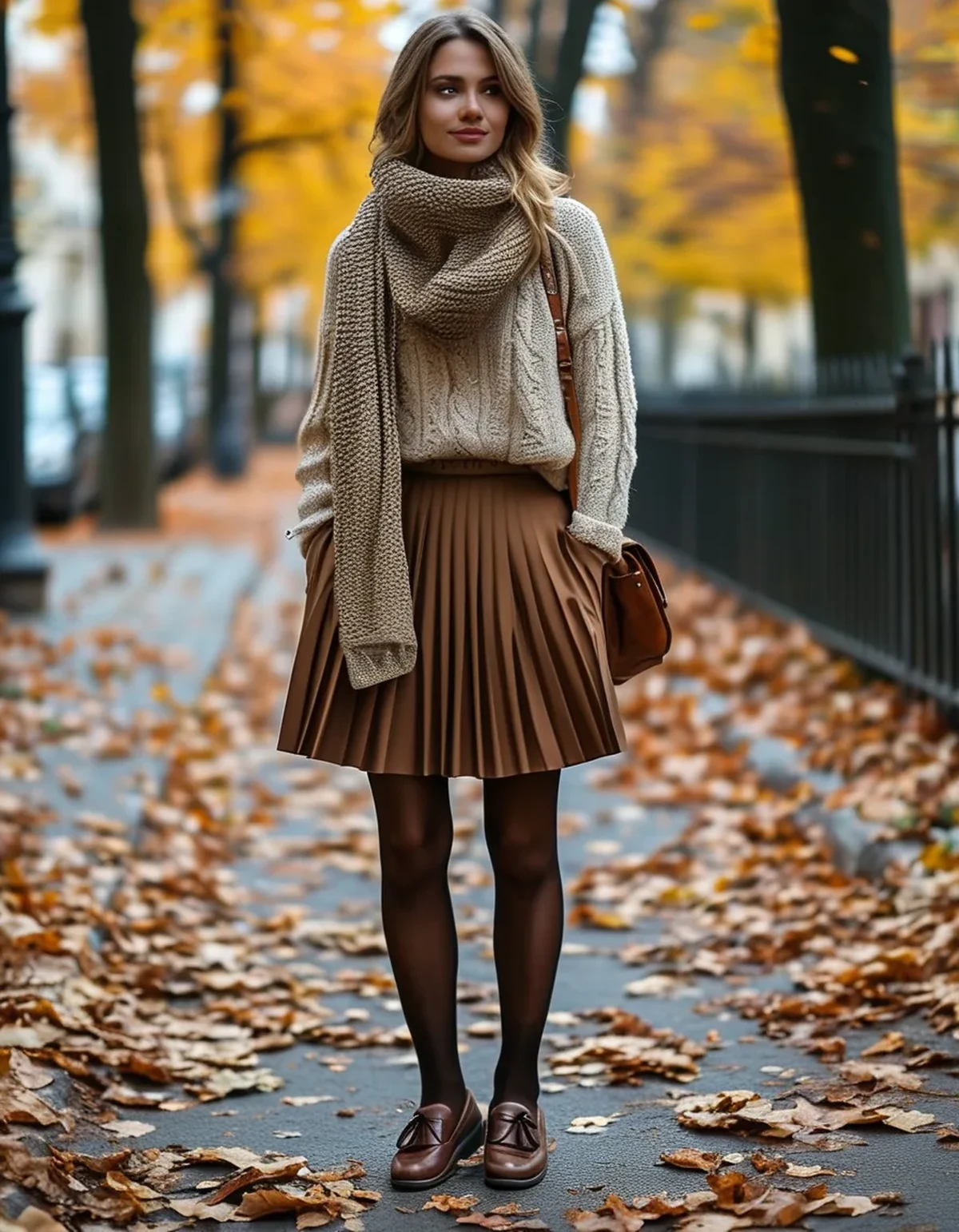
Why does the look date so specifically in September?
Because tenniscore is a seasonal reference, and a reference worn out of season reads as an error rather than as a style.
The visual language is drawn from a summer sport played on grass and clay in bright light. Every element carries that: white as the dominant colour, minimal coverage, lightweight fabric, low-profile sports footwear, bare skin.
When the environment stops matching, the eye notices. A crisp white pleated skirt with bare legs and white trainers on a grey October street does not read as a considered outfit — it reads as someone who dressed for a different day.
The specific offenders are the shoes and the legs. Both are large areas, both are at the bottom of the outfit where the eye finishes, and both are the elements most tightly bound to summer.
The pieces themselves are largely fine. A pleated skirt is a year-round garment. A polo or a fine knit works in any season. A cable knit is more autumn than summer. The silhouette is not the problem.
And the fix is not more layering. Adding a jacket over a summer-signalling base leaves the base signalling summer with a jacket over it. The substitutions have to happen at the elements that carry the seasonal information.
What are the two swaps?
Footwear and legs, in that order of impact.
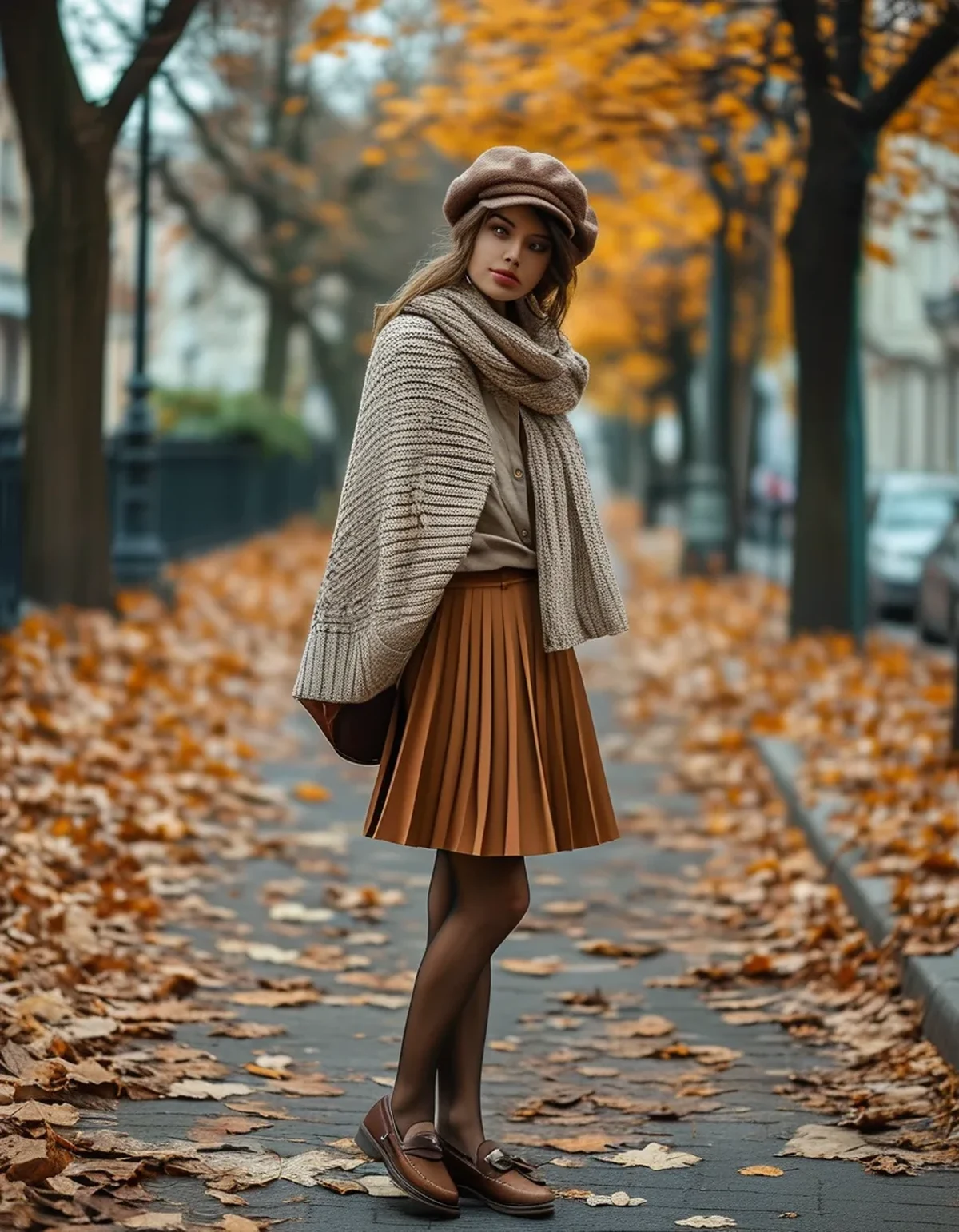
Swap one: the shoe. White low-profile trainers are the single most summer-coded element in the look. Replace with:
- A loafer, in black, brown or burgundy. This is the most direct substitution and it retains the preppy reference completely — arguably it strengthens it, since the loafer belongs to the same visual family.
- A low ankle boot with a modest heel, which handles weather and reads unmistakably as autumn.
- A leather trainer in a darker colour, if you want to keep the sportier line. Not white.
Swap two: opaque hosiery, chosen deliberately. Bare legs are the second summer signal. Sheer tights read as formal and slightly dated in this context; what works is opacity.
- Black opaque, 60-80 denier, is the reliable default and the most versatile.
- A colour that picks up something in the outfit — deep green, burgundy, navy — is the more interesting choice and reads as deliberate styling rather than practicality.
- A ribbed or textured tight adds visual weight, which balances a light skirt and reads distinctly autumnal.
- Knee socks with a low boot are the more playful option and are directly on-reference for the sport, which makes them work better than they should.
Do both swaps rather than one. A loafer with bare legs in October is still half in summer, and opaque tights with white trainers reads as a compromise. Together they move the whole outfit.
What else changes as the season turns?
Three secondary adjustments that matter once the two main swaps are done.
Fabric weight in the top half. A fine cotton polo is summer; a merino or lambswool knit in the same shape is autumn. The silhouette is identical and the material tells the story. A sweater vest over a collared shirt is the most on-reference autumn version of the look and it works every year.
Colour temperature. Tenniscore’s summer palette is white, cream and pale green. The autumn version keeps the same structure and drops the temperature: cream instead of white, forest instead of pale green, burgundy and navy as accents. Nothing about the silhouette changes.
Pleat behaviour changes with humidity and fabric. Summer pleated skirts are often lightweight polyester that holds its shape in dry heat and goes limp in damp. Autumn is wetter, and a heavier pleated skirt — wool blend, or a heavier crepe — holds its structure in conditions that flatten a summer one. This is a genuine reason a favourite skirt suddenly looks worse in October, and the fabric rather than the styling is the cause.
Outerwear should continue the reference rather than interrupt it. A varsity or a quilted jacket sits comfortably in the same visual world. A technical waterproof does not, which is why the look so often falls apart on a rainy day and why a wool coat is worth the compromise on practicality.
And the bag scales with the layers. A small structured bag that balanced a bare-legged summer outfit can look undersized once you have added a knit, tights and a coat. A slightly larger bag maintains the proportion.
Myth vs Fact: Transitional Tenniscore
Myth: the look only works in summer. Fact: the reference points — collegiate, preppy, sporting — are historically autumn as much as summer. Sweater vests, pleated wool skirts, loafers and knee socks are a genuine autumn tradition, not a workaround.
Myth: layering is what makes an outfit seasonal. Fact: layering adds warmth, and seasonality is communicated by the specific elements rather than the quantity. A summer-coded base under a coat still reads as summer with a coat on.
Myth: white is off-limits after summer. Fact: white is entirely fine in autumn; white low-profile trainers with bare legs are what dates the look. A cream knit or a white collar under a jumper reads perfectly well in November.
Myth: opaque tights are frumpy. Fact: opacity is what has made the difference in the last several seasons. Thin sheer hosiery is the dated option in this context; 60-80 denier in a considered colour is what current versions of the look are built on.
Myth: you need to buy autumn versions of everything. Fact: the two swaps are shoes and legs, and most people already own suitable shoes. A pair of opaque tights costs very little. The rest of the wardrobe carries over unchanged, which is the strongest argument for this particular aesthetic.
Myth: pleated skirts are hard to wear in cold weather. Fact: they are among the easier ones, because the volume accommodates a layer underneath — fleece-lined tights or thermal hosiery disappear completely under a pleat and extend the wearable season by months.
FAQ: Autumn Tenniscore, Answered
What denier should I actually buy?
Sixty to eighty for most purposes. Below 40 reads sheer and formal; above 100 starts to look like leggings and loses the hosiery quality. If you are buying one pair, 70 denier black is the most versatile thing you can own for this.
Do loafers work with socks?
Yes, and it is one of the more useful details in the whole look. A ribbed sock in a contrasting colour with a loafer is directly on-reference and solves the cold-ankle problem. Keep the sock either clearly visible or fully hidden — a sock peeping ambiguously over the shoe line is the version that looks accidental.
Can I keep wearing the white trainers at all?
With trousers and a knit, absolutely — the problem is specifically the combination of white trainers, bare legs and a short pleated hem, which is a complete summer sentence. Broken up, the individual pieces are all fine.
TL;DR:
- Tenniscore reads summer because of bare legs and white low-profile trainers — both large areas at the bottom of the outfit.
- Swap one: loafers, a low ankle boot, or a dark leather trainer. Swap two: 60-80 denier opaque tights in black or a considered colour.
- Do both together; one alone reads as a compromise rather than a transition.
- Secondary moves: merino instead of cotton, cream instead of white, a heavier pleated fabric that holds structure in damp weather, and a slightly larger bag.
- The pieces themselves carry over — this is one of the cheapest seasonal transitions in any wardrobe.
The reason the look seems to expire in September is that everybody changes the top half and leaves the bottom half alone. Two swaps at the floor level, and the same skirt you have been wearing since June becomes an autumn outfit without anything else changing.
See It in Motion
Seen here: UPF 50+ Adjustable A-Line Running Skort with Pockets — shop it on bubblelime.com
Keep Reading
This article is for general informational and styling purposes only. Fit, sizing, and product availability may vary.